Measured, Judged, Slightly Bruised: The Village Produce Show Is Live Theatre
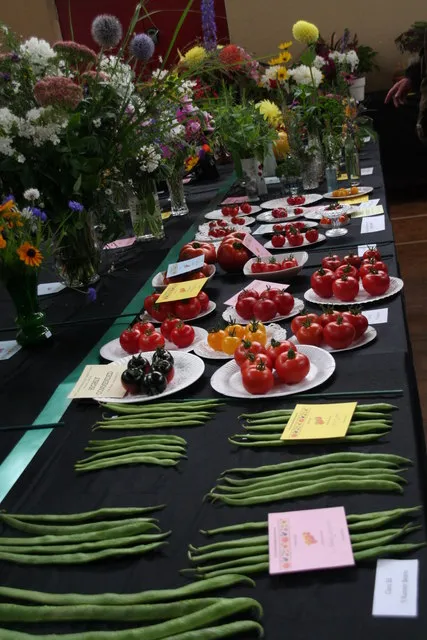
Photo: Chris , CC BY-SA 2.0, via Wikimedia Commons
On a damp Saturday morning in late autumn, the village hall car park fills with hatchbacks and the marquee starts to smell of tea, compost and lightly bruised ambition. This is the local produce show: a few trestle tables, a laminated schedule, a judge from three villages away and an atmosphere of such intense politeness that you could cut it with a prize-winning sponge.
To the outsider, it looks like nostalgia. A bit of jam, a few onions, a rosette. But spend an hour inside and you realise the produce show is not a museum piece. It is live theatre. The script is the class list, the cast is everyone you’ve ever nodded at in the Co-op, and the stakes are not money or fame but something much more combustible: local reputation.
The schedule is the script
Everything begins with the schedule. Twenty-five pence for a cup of tea, fifty pence to enter a class, and a list of categories that reads like a constitution for the parish. Three onions, dressed. Four tomatoes, with calyx. One jar of strawberry jam. One marrow, any variety. A vase of mixed garden flowers. A photograph entitled “Weather”. A vegetable animal made by a child under ten.
The rules are precise because the feelings are precise. You cannot simply turn up with a lovely tomato; you have to turn up with the right number of lovely tomatoes, presented in the right way. The schedule does not say “please impress the judge with your general vibe”. It says Class 14: three onions, tops trimmed to two inches. And somewhere in the village, someone is measuring two inches with the seriousness of a bomb disposal expert.
This is where the produce show reveals its first truth: expertise is still alive in Britain, but it has gone underground. It lives in sheds, allotments and back kitchens. It is not shouted about on television. It is quietly practised for eleven months and then displayed on a paper plate with a cardboard tag.
Judging is a contact sport played in whispers
The judge arrives at ten. They are usually a sensible person in a fleece, carrying a clipboard and a face that has seen too many perfect marrows to be easily impressed. They move along the tables while the rest of us hover at a respectful distance, pretending to look at the flower arrangements.
The whispers start almost immediately. “He’s marked that one down for the shape.” “She’s not happy about the jam.” “That’s the third year running Keith has won the onions.” Keith is not present, but Keith is somehow everywhere, his onions standing on their little plate like a small, pungent dynasty.
There is a myth that the produce show is genteel. It is not. It is a contact sport played in whispers. The rivalry is real, but it is bound by manners. Nobody says, “Your beetroot is rubbish.” They say, “Lovely colour on yours, Margaret — did you use the same seed as last time?” which is a sentence that can mean at least four different things depending on where you are standing.
The tea urn is the interval bar
Halfway through, everyone drifts to the tea urn. This is the interval bar, the green room, the place where the drama is dissected. A woman from the WI is cutting flapjack into squares the size of postage stamps. A man in a fleece is explaining, with real passion, why his runner beans were let down by the weather. Someone’s grandson is running a tombola with the grim determination of a future chancellor.
The tea is strong enough to strip paint and costs almost nothing. The conversation is the same. Weather, slugs, the price of compost, the judging. It is small talk, but it is not trivial. It is the connective tissue of a place. In a world where so much of our lives happens alone on screens, the produce show is a room where people still have to look each other in the eye and say, “Congratulations on your chutney.”
The marrow has feelings
The marrow is where the theatre gets emotional. A marrow is a ridiculous vegetable. It is too big, too watery, too vaguely threatening. And yet every year, someone grows one that looks like it has been carved by a Renaissance sculptor with a grudge. It sits on its white paper plate, enormous and slightly obscene, and everyone pretends not to be impressed.
The marrow has feelings because the grower has feelings. Behind every entry there is a story: the seed saved from a grandfather, the late frost that nearly ended everything, the neighbour who lent a greenhouse, the summer spent watering at six in the morning before work. The produce show is not really about produce. It is about evidence. Evidence that you paid attention, that you tried, that you made something with your hands and put it on a table for other people to judge.
And yes, some of it is suspiciously perfect. The jam that sets like stained glass. The carrots that look like they have been ironed. The eggs arranged with the symmetry of a military parade. But even the perfection is human. It is the perfection of someone who has practised, worried and probably lain awake thinking about whether their beans were too curved.
What the rosettes actually mean
By three o’clock, the rosettes are pinned to the winners and the hall starts to empty. The tea urn is switched off. The marquee flaps in the wind. Someone is carrying a giant onion to the car like it is a newborn. Someone else is quietly removing a “Highly Commended” card from a jar of marmalade and pretending they don’t care.
The produce show is easy to mock if you only see the surface: the polite applause, the slightly wonky handwriting on the entry tags, the smell of damp cardigan. But it deserves more respect than that. It is one of the last places where ordinary expertise is publicly valued. It is a competition that rewards patience, care and a bit of obsessive behaviour. It is annual proof that community is not a vague feeling; it is a rota, a schedule and a judge from three villages away.
So next autumn, when the marquee goes up and the tea urn starts to steam, don’t drive past. Go in. Look at the onions. Read the schedule. Have a cup of tea. And remember: the marrow has feelings, the judge has a clipboard, and the village produce show is the best live theatre you’ll see all year — even if the only special effect is a particularly good jar of chutney.