Six Forty-Five, Aisle Nine: Notes From the Reduced Shelf
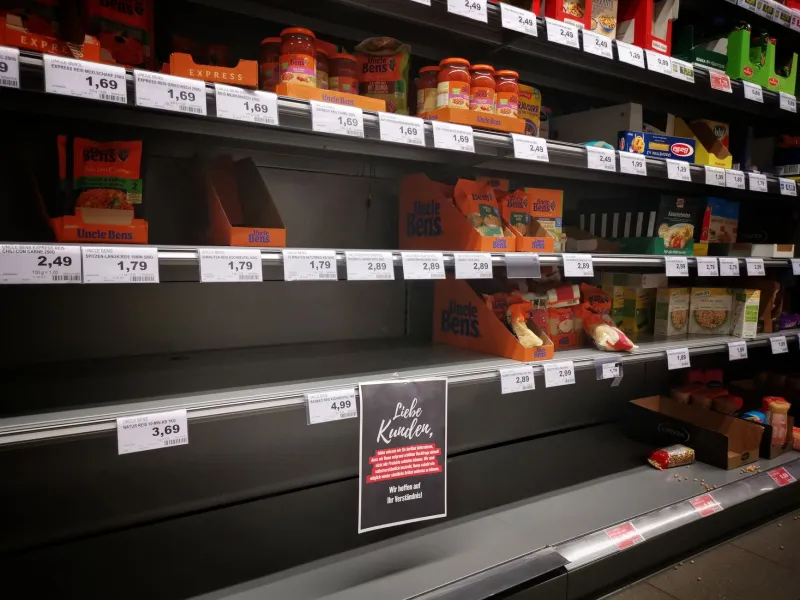
There is a particular sound in a British supermarket at about twenty to seven in the evening. It is not the tills, and it is not the fluorescent hum. It is the soft, deliberate squeak of a trolley wheel being pushed at a pace that suggests the driver has all the time in the world and absolutely none of it. Somewhere near the back of the store, a member of staff is holding a little black gun and a roll of yellow stickers, and a small crowd is beginning to gather without ever admitting that it has gathered.
This is the yellow sticker hour. It is not a trend, a hack or a lifestyle movement. It is a daily ritual, and like most good British rituals it runs on queuing, understatement and a shared understanding that nobody should make a fuss. You do not clap for the person who gets the last reduced chicken. You do not high-five over a 70p quiche. You simply nod, perhaps raise an eyebrow, and move on with your evening.
The 6:45 Rosary
The timing is not official, which is exactly why everyone knows it. In most stores, the final reductions tend to land somewhere between late afternoon and early evening. The exact minute varies by branch, by manager, by how quickly the fresh section has been cleared. But the regulars have worked it out. They know that the first pass is often cautious, a few pennies off, and that the second pass is where things get serious. They know which aisle to linger near and which one to pretend they are not lingering near.
There is an art to this. You cannot stand directly in front of the reduced section for forty minutes. That would be gauche. Instead, you orbit. You examine the olives. You read the back of a jar of pesto with the intensity of a scholar. You drift back towards the chilled shelves as if it were a coincidence, as if you had simply remembered that you needed something near the place where the yellow stickers live. The veterans do this without apparent effort. They make the whole thing look like a stroll.
An unwritten rulebook
The etiquette is surprisingly strict for something that has never been written down. First, do not crowd the staff member applying the stickers. They are doing a job, and they are not a gameshow host. Second, do not grab from under someone else’s hand. If a person is clearly waiting by a particular shelf, let them have first look. Third, and most importantly, there is no gloating. The yellow sticker is a small private win, not a public trophy.
There is also a hierarchy of need that nobody quite articulates. A family with a full trolley and a list is not the same as a student buying a single reduced baguette and a tub of hummus. A pensioner who has been shopping at the same store for thirty years gets a certain unwritten respect. The rules are not enforced. They are felt. And somehow, most of the time, they hold.
What I like about the reduced shelf is that it is one of the last places in British retail where you have to actually look at what you are buying. The packaging is the same, but the price is different, and the clock is ticking. You pick up a pack of salmon and turn it over. You check the date. You weigh up whether you will really eat it tonight or whether it will become a fridge ornament. It is a tiny act of judgement, and it feels oddly honest.
The morality of the markdown
There is a lazy way to talk about reduced food, and it usually involves either pity or mockery. Neither is right. The yellow sticker aisle is not a soup kitchen, and it is not a punchline. It is a place where people make practical decisions in public. Some are budgeting carefully. Some are simply unwilling to pay full price for something that will be binned by morning. Some are students, some are parents, some are retired, some are people who earn a perfectly decent wage and still resent throwing away good food.
That last point matters. In 2026, we talk endlessly about sustainability, about food waste, about the cost of living. Supermarkets have whole advertising campaigns about their commitment to the planet. And yet the reduced shelf is often treated like a slightly embarrassing relative: pushed to the back, tucked away, marked down in a hurry. It should be the opposite. It should be a point of pride. Every yellow sticker is a meal that does not go in the bin. Every reduced loaf is a small environmental victory disguised as a bargain.
What the supermarkets get wrong
Here is a modest proposal. If supermarkets really cared about waste, they would stop making the clearance aisle feel like a secret. They would give it a proper home, perhaps a dedicated bay with clear signage, rather than a random stretch of shelving that changes every week. They would tell shoppers when the final reductions happen. They would design the stickers so you can actually read the new price without squinting. And they would stop acting as if buying reduced food is something to be ashamed of.
There is also a staffing point. The person with the sticker gun is doing a job that requires speed, judgement and a certain amount of public patience. They are not just marking down yoghurts. They are managing a small daily scrum. A bit of training, a bit of space and a bit of respect would not go amiss.
The last honest queue
The yellow sticker hour is not glamorous. It is not a festival. It will not appear on a list of great British traditions alongside morris dancing or cheese rolling. But it is a genuine folk culture, and it is happening tonight in a supermarket near you. There will be a woman in a padded coat who knows exactly which member of staff does the final pass. There will be a man who has convinced himself he is only there for milk. There will be a brief, polite standoff over a reduced pizza. And then it will be over, and everyone will go home with something they did not quite plan to buy.
In a world of loyalty schemes, personalised offers and apps that track every purchase, there is something refreshingly blunt about a yellow sticker. It does not care who you are. It just says: this is what it costs now, and it will not be here forever. You either take it or you leave it. That is not a sad story. It is a small, ordinary, deeply British contest, and it is one of the few left that nobody can rig.