The Church Hall Jumble Sale Is a Masterclass in Polite Chaos

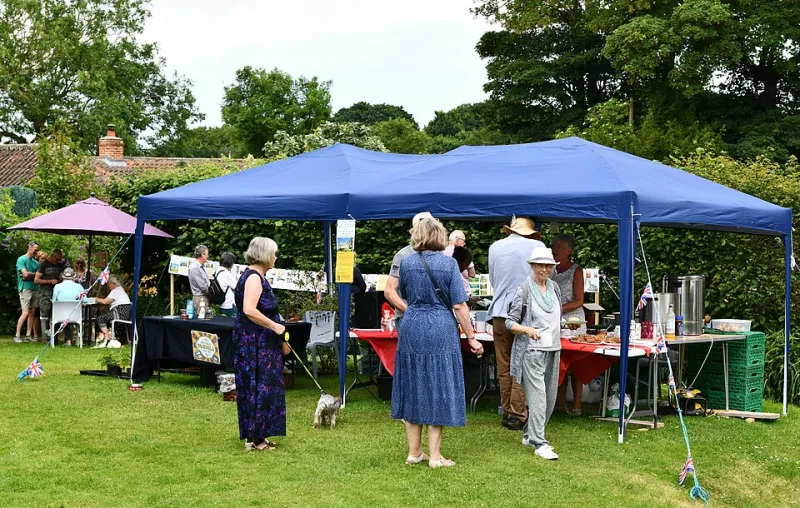
Photo: church hall jumble sale trestle tables tea urn UK, via i.pinimg.com
At 9:40 on a Saturday morning, the church hall already smells of dust, disinfectant and the faint ghost of last week’s tea. Trestle tables sag under other people’s cast-offs. A laminated sign says NO EARLY BIRDS, which is a lie, because half the queue is already inside, pretending to read the noticeboard. This is not a shopping trip. It’s a morning out.
The Queue Is the Point
There is a particular kind of conversation that only happens in a jumble sale queue. It starts with the weather, moves through the state of the car park, and settles, inevitably, on last month’s sale. Someone will mention the missing saucer. Someone else will say they nearly bought a lamp. Nobody is in a hurry. The queue is not an inconvenience; it is the warm-up act.
Online marketplaces have removed the waiting, and in doing so they have removed the point. You cannot browse a church hall from your sofa. You cannot ask the woman in front of you whether the Le Creuset pot is worth a fiver. You cannot hear the vicar say, with genuine regret, that the cake stall has sold out. The queue is a conversation with a purpose. It is also the only place where you can be pleasantly nosy without anyone minding.
The Tea Urn as Social Contract
The tea urn sits at the back, next to a folding table with a tin of biscuits and a handwritten sign that says TEA 50P. The tea is not good. It is, at best, beige. But the urn is not really serving tea. It is serving permission to sit down.
You pay your 50p, you take a plastic cup, and you become part of the room. The tea station is where deals are confirmed, gossip is exchanged, and small children are introduced to the concept of a saucer. It is a civic living room with a damp floor and a noticeboard advertising a disco that happened three weeks ago. You don’t have to buy anything. But you do buy tea. It’s the toll for being there.
Haggling Without Cruelty
Jumble sale haggling is a gentle art. It sounds like this: “Would you take 50p?” “It’s for the roof fund.” “Go on then.” Nobody wins. Nobody loses. The price is a suggestion, and the seller often gives it to you anyway, because the real transaction is the exchange, not the discount.
This is the opposite of the car boot sale, where haggling can feel like a sport. Here, it is closer to a chat. You are not trying to beat anyone. You are trying to participate. The woman behind the table wants to know if you’re the one who bought her sister’s slow cooker last year. She wants to tell you it still works. You want to tell her you made a stew in it. For a moment, you are neighbours in a way that has nothing to do with where you live.
The Sorting Table
Every jumble sale has a sorting table. It is usually covered in books, cables, novelty mugs and a puzzle with three pieces missing. The sorting table is an archive of ordinary life. You learn about your neighbours from their cast-offs. Here is a biography of someone who liked thrillers and had a cat. Here is a set of golf clubs that clearly belonged to a man who gave up. Here is a child’s toy, still in its box, that someone bought in optimism and donated in defeat.
It is a museum of the recent past, curated by accident. You don’t come for the quality. You come for the stories. And you leave with a book you will never read and a bowl you didn’t need, because the bowl was 20p and the woman said it was her mother’s and she’d rather it went to someone who liked it.
What You Actually Take Home
You take home a pound coin’s worth of stuff and a reusable bag full of nothing much. But mostly you take home a sense of having been somewhere. The church hall jumble sale is not efficient. It is not optimised.
That is the point. It is a Saturday morning with a beginning, a middle and an end. You queue. You rummage. You drink beige tea. You say hello to someone you haven’t seen since the last one. You walk home with a slightly damp paperback and the feeling that the weekend has actually started.
Next Saturday, take a pound coin and a bag for life. You’ll come back with something you didn’t need and a conversation you did.