Half a Rood and a Packet of Seeds: The Quiet Case for the Allotment Queue
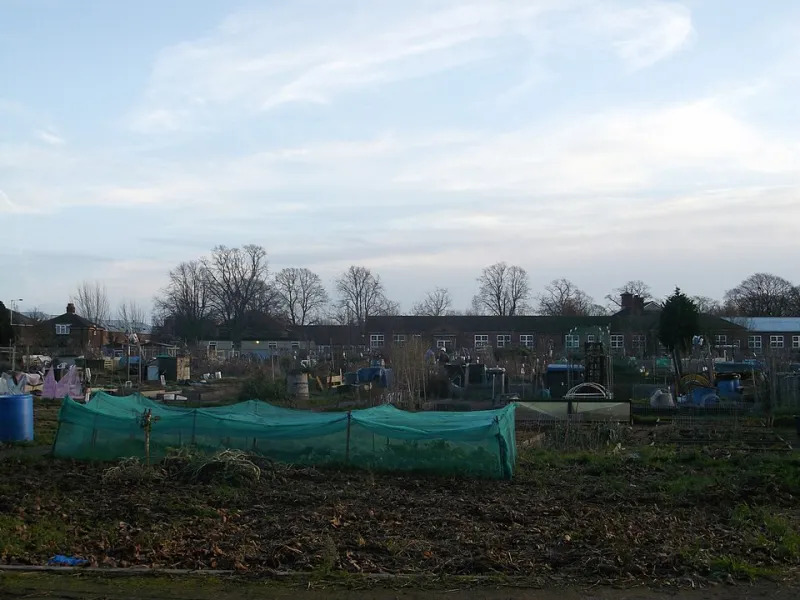
Photo: David Anstiss , CC BY-SA 2.0, via Wikimedia Commons
The sign on the gate is laminated, which feels optimistic. ALLOTMENT WAITING LIST: CLOSED. Underneath, in marker pen, someone has added: “Check back in spring. Or don’t. It’s a long list.” I stand there for a minute, hands in pockets, and feel an odd sort of affection for the whole arrangement. Here is an institution that does not want my money, cannot be sped up by an app, and has absolutely no interest in my convenience. It is, in its own quiet way, one of the last honest things left in Britain.
The list is not a delay; it’s a down payment on belonging
We are taught to see waiting as failure. A queue is a problem to be solved, a hold-up to be routed around. But the allotment waiting list is different. It is not a queue in the supermarket sense, where the person in front is an obstacle. It is closer to a register of hope. You put your name down, you pay a nominal fee, and you enter into a contract with a piece of land you have never seen. You agree to be patient. In return, the council or the parish or the allotment society agrees to keep the idea of you and a patch of earth in the same sentence.
I know people who have been on the list for six years. One woman in Leicestershire told me she treats the annual renewal letter like a birthday card from a distant relative. She has no plot, no shed, no compost bin. But she has a name on a sheet of paper, and that, apparently, is enough to keep her going. “It’s the only thing I’ve ever joined that didn’t want anything from me,” she said. “Except patience. And I’ve got plenty of that.”
The shed parliament and the strimming constitution
Walk past any mature allotment site on a Sunday morning and you will see the real government at work. Not the council, not the committee, but the shed parliament. These are the men and women who arrive at eight, put the kettle on a camping stove, and spend the next two hours discussing the water pressure, the state of the communal path, and whether the new couple on plot 14 really understand what they’ve taken on.
The rules are unwritten but absolute. You strim your edges. You do not help yourself to someone else’s rhubarb without asking, even if it is spilling over the path. You say hello but not too much. You do not park across the gate. You return the wheelbarrow. You accept that the bloke three plots down will always have better runner beans than you, and you do not take it personally. This is not performative neighbourliness, the kind that involves a WhatsApp group and a rota for bin night. It is practical, stubborn, slightly grumpy, and it works.
There is a hierarchy, but it is not the one you might expect. The biggest shed does not win. The person with the most impressive greenhouse does not automatically get respect. What earns you a seat in the shed parliament is consistency. Turn up in February when it’s freezing and the ground is like iron. Fix the tap when it starts dripping. Bring spare courgettes to the communal table in August, even though everyone else has spare courgettes too. That is how you become part of the place.
The honesty box is a micro-economy with a memory
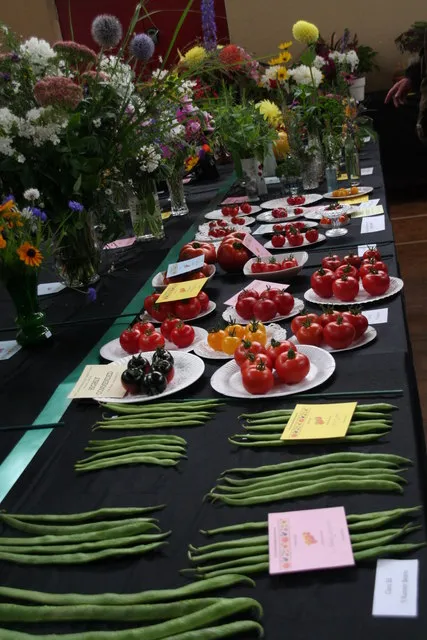
At the entrance to most sites there is a small box, usually wooden, sometimes a repurposed biscuit tin, with a handwritten sign: “Surplus veg. 50p a bag. Honesty box.” The prices are vague. The bags are uneven. The box is rarely emptied on time. And yet it works. People put in their coins, take their beans, and the whole thing trundles along without an app, a card reader, or a single line of code.
What I love about the honesty box is that it is not really about money. It is a circulation system. The surplus from one plot becomes the dinner of another. The money goes towards the site’s insurance, or a new strimmer, or a bench that someone’s uncle is going to build and then never quite finish. It is a tiny economy with a memory, and it runs on the assumption that most people are mostly decent most of the time. In 2026, that feels almost radical.
What the gym cannot sell you
The gym sells you metrics. Reps, sets, personal bests, a little graph on your phone that tells you you are improving. The allotment sells you the opposite. It sells you slugs, blight, a summer that refuses to rain, and a winter that floods the bottom corner of your plot. It sells you failure, but slowly, and with company. You cannot optimise a compost heap. You cannot personal-best a parsnip. You can only turn up, do the work, and hope.
That is why the waiting list matters. It is not just a list of people who want to grow vegetables. It is a list of people who want to belong to something that does not fit neatly into a subscription model. A place where the neighbourly thing to do is to lend someone a fork and then quietly check that they have strimmed their edges. A place where the bent greenhouse is not an eyesore but a monument to imperfection. A place where you are judged not by your output but by your presence.
The waiting is the point
I joined the list last week. I have no idea when I will get a plot. It could be next year. It could be never. But for now I have a name on a sheet of paper and a vague plan involving potatoes and a second-hand shed. It is the slowest drama in Britain, and I am happy to be in the audience. Sometimes the best thing you can do is put your name down and wait.