Act One Is Only the Warm-Up: Confessions of an Interval Queue Regular
Bonfire Night has only just stopped smelling of smoke, which means panto season is already clearing its throat. But before the dame's wig and the fairy lights, I want to make a case for the most underrated part of a night at the theatre: the bit where nothing happens.
The interval.
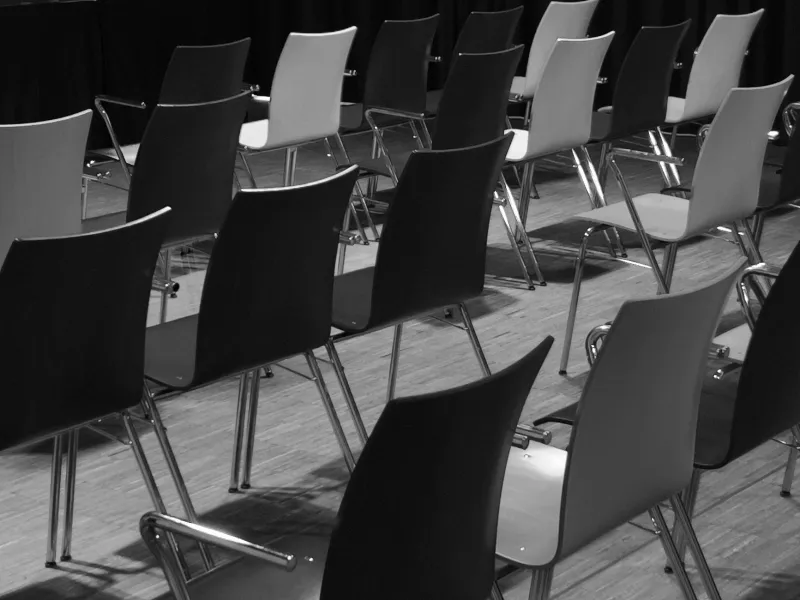
Last Friday I was in a village hall with a ceiling low enough that the tall man in row C had to fold himself in half to get to his seat. Act I ended. The lights came up. And sixty people, none of whom had been told to, turned to each other and started talking.
That's the thing about the interval. It isn't an interruption. It's the point.
The Great Urn Lottery
There is a specific kind of tea you only get from a village hall urn, and it tastes of hot water, mild panic and the ghost of a teabag that went in sometime around the first read-through. It is served in a mug that says something like WORLD'S OKAYEST GRANDAD. It costs a pound, or nothing, or whatever you can put in the honesty tin. Beside it there is a plate of biscuits arranged by someone with strong opinions about bourbons versus custard creams.
The queue for this tea is slow. It is meant to be slow. You shuffle forward, you say 'two sugars' to a stranger, you overhear someone behind you say 'well, I didn't see that coming' about the plot twist, and you realise you are in the middle of the best conversation you'll have all week. The urn is a social engine. It runs on small talk and weak squash.
Compare that with the West End, where you can pre-order your drink, tap your card and be back in your seat before the lights dip. Nothing wrong with efficiency. But it's a transaction, not a room. The village hall interval is a room.
Whispered Verdicts in the Foyer
The foyer — or the corridor, or the bit by the cloakroom — becomes a parliament. People who have never met debate whether the vicar's accent slipped in the second scene, whether the set is going to survive the bit with the suitcase, whether the young lad playing the servant is actually rather good. Nobody is writing a review. They're just saying 'I thought she was marvellous, mind.'
This is criticism at its most honest, and its most useful. Half-time is the only bit of culture where you're allowed to revise your opinion before the thing has even finished. You go in thinking it's a bit slow. You come out of the queue having been persuaded that it's building to something. You sit down for Act II actually paying attention, because someone in a fleece has told you to watch the brother.
The interval is an editorial process. It's the audience editing itself.
What We Lose When the Lights Never Come Up
There's a fashion for shows that run straight through — eighty minutes, no break, 'immersive', 'relentless'. Sometimes that's exactly right. A tight ninety minutes with no interval is a gift, and I'll defend it. But often the no-interval choice isn't artistic. It's a way of keeping costs down, or a fear that people won't come back in.
And what gets lost is the pause that makes you pay attention. Without a break there's no digestion. No chance to turn to the person next to you and say 'what was that about the letter?' No chance for the cast to hear the room and adjust. No chance for the raffle.
Yes, the raffle. For small touring companies and amateur societies, interval sales — the bar, the tea, the cake stall, the bring-and-buy table — are not a sideline. They're the difference between breaking even and not. We talk a lot about access to culture. A break is access. It's a loo queue and a sit-down for people who find two hours a long time to be still. It's a chance for the friend who was unsure about coming to admit they're enjoying it.
A Short Defence of the Squashy Queue
The squashy queue is a social contract. You stand closer than you would in a supermarket. You apologise. You make a joke about the urn. In a world increasingly designed to be frictionless — book ahead, scan, leave — the interval is gloriously inefficient, and all the better for it.
It's also where the best bits of the night actually happen. The retired teacher who tells you the society did a better production in 1989. The teenager selling raffle tickets with the enthusiasm of a junior minister. The bloke who's been roped into doing the lights and is quietly having a nervous breakdown by the fuse box. You don't get any of that from a straight-through show.
So here's the ask. This panto season, when the lights come up halfway through and everyone looks at each other, don't check your phone. Don't stay in your seat. Get in the queue. Have the tea. Argue about Act One with a stranger.
Two sugars. It's the best seat in the house.