The Board by the Bus Stop Knows Your Street
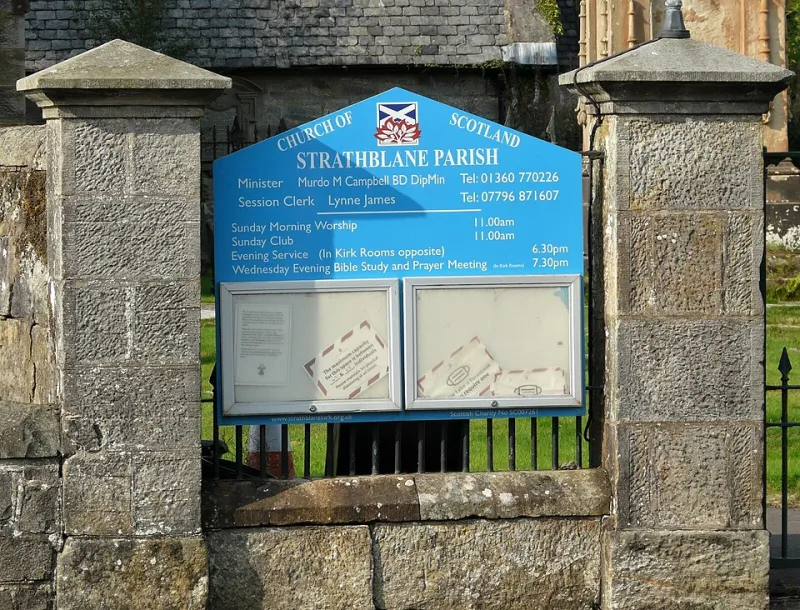
Photo: Richard Sutcliffe , CC BY-SA 2.0, via Wikimedia Commons
There is a noticeboard near me that leans slightly to the left. Not politically — structurally. One hinge has given up, the glass has a scratch across the middle, and the cork is so faded it looks like old toast. It is, by any reasonable aesthetic standard, a mess. It is also the only feed I check that has never asked me to accept cookies.
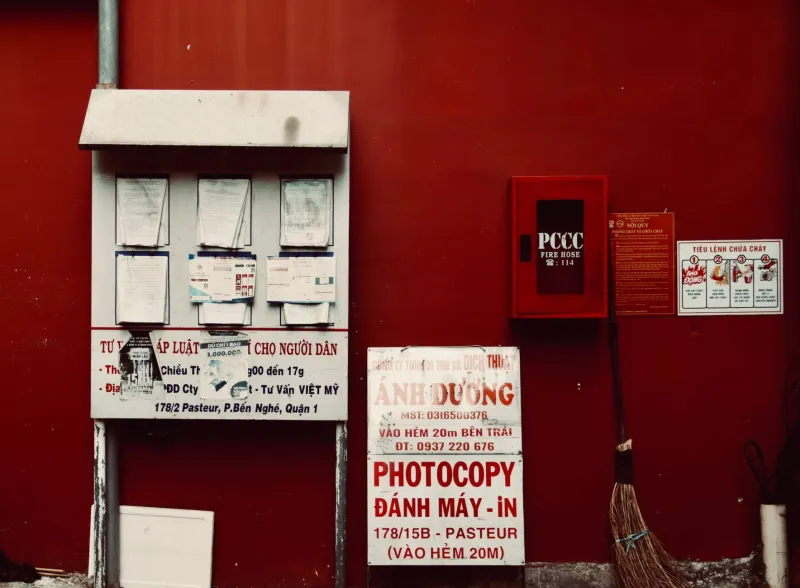
I walk past it on the way to the bus stop. This week it is advertising a Thursday yoga class in the church hall, a scout jumble sale, a parish council consultation on parking, a missing tabby called Biscuit, and a coffee morning in aid of the roof fund. There is a tear-off strip for a dog walker, a laminated sign about the mobile library, and a handwritten card offering apples from an allotment. Nothing is ranked. Nothing is promoted. Nobody has paid to put it at the top. It is just the street, pinned to a board.
A feed you have to walk to
We have got used to the idea that a feed should come to us. It arrives on a phone, tailored to our habits, endlessly refreshed by people who know exactly which words make us stop scrolling. The parish noticeboard does the opposite. It waits. You have to leave the house, remember to look, and stand in whatever weather is happening. That sounds like a flaw. I think it is the feature.
Because the board is finite, it forces choices. There is only so much cork. A poster goes up because someone thinks it matters enough to find a drawing pin. It stays up because nobody has taken it down. It gets moved to the side because a newer, more urgent thing has arrived. That is not a sophisticated algorithm, but it is an honest one: urgency by thumbtack, relevance by postcode, moderation by whoever has the key and a spare five minutes.
The order is not personalised. Your neighbour sees the same missing cat, the same road closure, the same church hall booking. You might disagree about the parking consultation or the state of the pavements, but you are at least starting from the same scruffy piece of cork. In a country where two people on the same street can live in completely different information universes, that is worth something.
Moderation by drawing pin
Noticeboards are accountable in a way that digital feeds rarely are. Most notices have a name on them. A phone number. A date. A venue. If the yoga class is cancelled, someone has to take the poster down. If the jumble sale is on Saturday, the board says Saturday. If the council is consulting on parking, there is usually an address, an email and a closing date, not a vague promise to engage with stakeholders.
There is no shadowbanning on a noticeboard. There is no mysterious reach penalty for mentioning a rival event. If your poster falls behind the glass and nobody can read it, that is not an invisible algorithm suppressing your content — that is Brian from the parish office having a bad morning. The system is imperfect, but it is legible. You can see how it works. You can ring the person who runs it. You can turn up at the church hall and ask.
And there is a small but useful social pressure to the whole thing. A laminated sign is a promise. A handwritten card is a person. A poster with fifty tear-off tabs is an act of optimism. The board works because people mostly do what they say they will do, and because the rest of us can see when they do not. That kind of low-level accountability is the glue of ordinary places, and it is much harder to find online.
The quiet politics of cork
It is easy to treat the parish noticeboard as quaint — a bit of village furniture, like a red phone box or a war memorial. But it is closer to civic infrastructure. For people without smartphones, or without the confidence to navigate council websites, it is often the first place a consultation becomes visible. For small groups with no marketing budget, it is a free shop window. For the isolated, it is a reason to walk to the end of the road and read something that is not shouting at them.
That matters more than we tend to admit. Local democracy runs on small notices: planning applications, parish meetings, road closures, school fairs, food bank collections. None of it trends. None of it goes viral. But it is how a place tells itself what is happening. When the board goes quiet — when the glass is broken and nobody replaces it, when the council moves everything to a website nobody checks, when the only posters left are for dominos and a conservatory company — something small but real disappears from the street.
I am not arguing that we should bin our phones and communicate entirely through cork. I like a group chat as much as anyone. But there is a difference between convenience and capture. The noticeboard does not want your data. It does not want your attention for six hours. It does not care what you clicked on last Tuesday. It wants you to know that the 47 bus is on diversion and that Biscuit is still missing.
Keep the pins stocked
So here is a modest proposal. Treat the parish noticeboard as infrastructure, not decoration. Fix the hinge. Replace the glass. Put it at a height people can actually read. Give it a light that works in winter. Make sure the council still uses it for the things that matter. And if you are the sort of person who runs a local group, put a poster up. Not because it will go viral, but because it will be seen by the people who live near you.
The last honest algorithm is not a clever piece of software. It is a lump of cork by the bus stop, slightly damp, covered in other people’s business. It has no tracking cookies. It has no engagement metrics. It has a missing cat and a coffee morning and a consultation on parking. That is not a poor substitute for the internet. In some ways, it is the better version of it.