The Five-Minute Republic: In Praise of the Bus Shelter
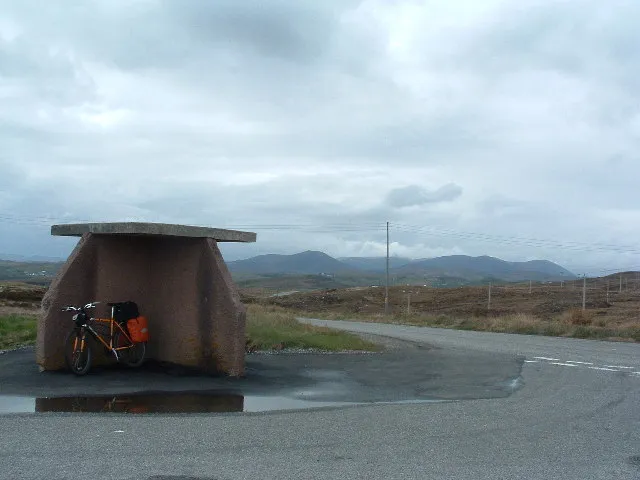
Photo: Alan Stewart, CC BY-SA 2.0, via Wikimedia Commons
It is a wet November afternoon, the kind that makes the pavements shine like old coins, and there are four of us under the shelter. A pensioner with a wheeled trolley. A teenager wearing headphones like ear defenders. A delivery rider checking his phone. Me, pretending I am not checking the timetable I have already checked twice. Nobody speaks. Nobody has to. For five minutes we are a small, accidental household, bound together by the same faint hope that the number 47 is coming.
That is the bus shelter’s quiet magic. It is not cosy. It is not designed by a brand consultancy. It smells faintly of wet coat and old chewing gum. But it is public in a way that almost nothing else is any more. You do not have to buy anything. You do not have to be productive. You do not have to look as if you are enjoying yourself. You just have to wait.
A room with no admission fee
Compare it with the coffee shop, which has spent the last decade positioning itself as the nation’s third space. The coffee shop is fine. I like the coffee shop. But the coffee shop is not really a living room; it is a transaction with chairs. You buy a drink, you get a table, and somewhere in the unwritten rules of modern Britain you are expected to keep earning your seat with another flat white or a slice of banana bread. The bus shelter asks for nothing except a degree of tolerance for other people’s elbows.
That makes it quietly radical. In a bus shelter, the retired man and the schoolkid and the gig worker are not customers. They are passengers. The distinction matters. The shelter is one of the few places where you can stand still without being moved on, and where the only status symbol is whether you managed to get the dry end of the bench.
The awkward, necessary art of waiting together
Most of the time, nothing happens. That is the point. We have become suspicious of shared silence, as if it is a problem to be solved with a podcast or a screen. But the bus shelter offers a different sort of company: low-stakes, temporary, entirely optional. You can talk if you want. Usually you do not. Occasionally someone says the bus is late, and someone else says it always is, and a third person says it was on time yesterday, and for a moment the shelter becomes a tiny forum for local truth.
I have heard more useful conversations in bus shelters than I have in some panel events. Not because they are profound, but because they are uncurated. Nobody has been invited. Nobody is performing expertise. A woman once told me, with great seriousness, that the trick with the 47 is to stand near the kerb so the driver sees you. I have no idea if that is true. I have followed it ever since.
A small democracy with a damp bench
The shelter is also a reminder that public transport is not just about getting from A to B. It is about who gets to move, and who gets to wait, and what we provide for people while they do it. When a route is cut to two buses a day, the shelter does not disappear immediately. It just becomes a monument. You see them in villages and on the edges of towns: a clean-ish glass box with a laminated timetable curling at the corner, serving a service that has been pared back until it is more of a rumour than a schedule.
That is why the current pressure on local bus networks should worry us beyond the obvious inconvenience. Every reduced route takes away not just a journey but a meeting place. The shelter is where the teenager learns to be out in the world without spending money. It is where the older person can sit down for a moment on the way to the shops. It is where the night-shift worker waits in the dark, hoping the lighting works. These are small things, but small things are what a society is made of.
Not all Perspex and nostalgia
Let us not pretend every bus shelter is a minor architectural treasure. Some are grim. Some have missing panes, no bench, a timetable you would need a degree in cryptography to decode, and a bin that has been full since spring. Some feel unsafe after dark. Romanticising neglect is its own kind of nonsense. A shelter without a seat, lighting, or reliable information is not a public living room; it is a bus-shaped cupboard.
But that is an argument for maintenance, not for giving up. The fact that a shelter can be shabby and still matter is part of the point. It is infrastructure, not an experience. It does not need a rebrand. It needs a bench, a light, a working display, and a bus that turns up.
The melted chocolate bar test
My favourite bus shelter moment involved a melted chocolate bar. It had been left on the seat, obviously forgotten, and was now in that alarming state between solid and puddle. A man in a raincoat looked at it, looked at the empty space beside it, and then used a receipt from his pocket to flick it into the bin. Nobody applauded. Nobody said anything. It was a tiny act of civic housekeeping, performed without ceremony, and it made the shelter better for everyone who came after him.
That is the bus shelter in miniature. It is not a place for grand gestures. It is a place where we practise the ordinary stuff: sharing space, tolerating noise, moving a melted chocolate bar, making room for a buggy, letting someone sit down. It is a five-minute republic, and we are all citizens of it, whether we like it or not.
So next time you are waiting, look around. You are not just killing time. You are in one of the last rooms in Britain where nobody is trying to sell you anything, and where the only thing you have to do is be there. That is worth defending, even if the bus is late.