The Algorithm Can’t Do Mud: In Praise of the Sunday Car Boot Sale
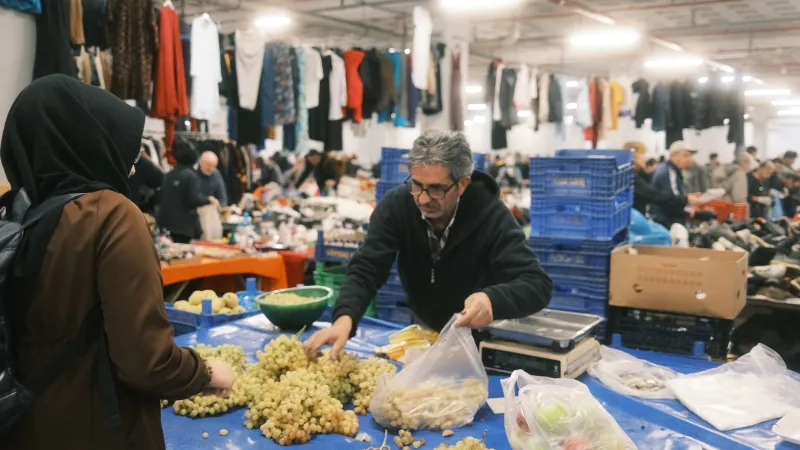
On a Sunday morning in November, the field behind the bypass is already half full. A man in a waterproof coat is selling a set of golf clubs, a bread maker and a framed picture of a dog in a sailor suit. Nobody has recommended any of it to me. That is the point.
Car boot sales have a reputation as places to find a bargain. And yes, you can still come away with a decent drill for eight quid. But the real pleasure is not the bargain. It is the randomness. In a culture where almost every purchase is nudged by an algorithm, the car boot sale remains gloriously unoptimised. You cannot search it. You cannot filter it. You have to walk.
A fiver and no plan
The entry fee is usually a few pounds, sometimes less if you arrive late and the sellers are starting to think about the football. You park in a muddy field, follow the crowd and begin. There is no map. There is no schedule. The best stall might be by the gate or it might be three rows back, next to a van selling dubious power tools and a woman with a table full of mismatched plates.
This is not a curated experience. It is a field full of other people’s decisions. Some of those decisions were good. Most were made in 1998. That is what makes it interesting.
The anti-algorithm
Online resale is brilliant in its way. You can find the exact thing you want, compare prices, check reviews, have it delivered by Tuesday. But it is also a machine for narrowing the world. The algorithm learns what you like and then feeds it back to you in slightly different packaging. The car boot sale does the opposite. It offers you a camcorder, a brass candlestick, a box of wrestling magazines and a wok. You did not know you wanted any of them. You still don’t. But you have seen them.
That is a different kind of shopping. It is closer to browsing a library than ordering a takeaway. The pleasure is in the surprise, not the efficiency. A good car boot sale makes you realise how narrow your own tastes have become.
Haggling as small talk
There is a ritual to the haggling, and it is not really about the money. You ask how much. The seller says a fiver. You pull a face. They say four. You say three. They say go on then. Everyone enjoys it. It is a small, low-stakes negotiation that greases the morning.
What I like is that it forces a conversation. You cannot silently tap your card and leave. You have to talk to the person selling the thing. They might tell you where they got it, why they are getting rid of it, or that their son had one just like it. You do not have to care. But for thirty seconds you are in each other’s orbit.
The accidental museum
A car boot sale is also a museum of ordinary British life, except the labels are missing and everything is for sale. You see the objects that filled houses: the pressure cooker, the hostess trolley, the boxed set of Catherine Cookson novels, the mug from a seaside town that no longer has a pier.
It is anthropology with a cash box. You learn what people valued, what they kept, what they could not bring themselves to throw away. A stall full of baby clothes tells you someone’s family is moving on. A table of tools tells you someone has stopped doing DIY. The field is full of small histories, arranged on pasting tables.
What we lose when everything is listed
We are told that modern life is more convenient than ever. You can book a cinema seat, a restaurant table, a weekend away, a slot at the tip. You can order a taxi, a coffee, a haircut. Almost everything can be scheduled, ranked and reviewed.
The car boot sale refuses all of that. It is not bookable. It is not rated. It might be rubbish. It might be the best morning of your month. You will not know until you get there, and even then you might miss the good stall because you stopped to look at a man selling a lawnmower he swears still works.
That uncertainty is not a flaw. It is the whole point. In a world that keeps trying to recommend what comes next, a muddy field full of random objects is a rare kind of freedom.
Go early, leave muddy
So go early. Take cash. Wear shoes you do not mind ruining. Buy something you did not plan to buy, then wonder where you are going to put it. Chat to a stranger about a chair. Leave with mud on your trousers and a vague sense that you have been somewhere real.
The car boot sale is not glamorous, and it is not efficient. It is better than that. It is unpredictable, and in Britain in 2026, that is worth getting up for.