One Listener, One Song: The Quiet Radicalism of Hospital Radio
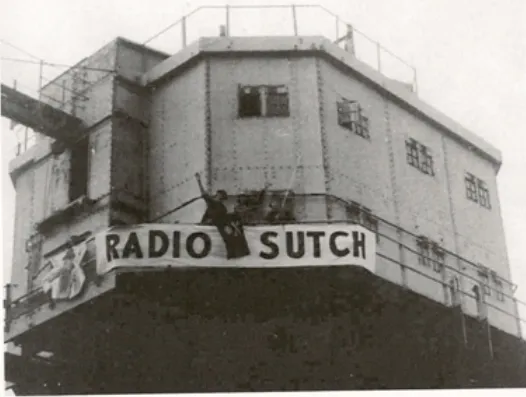
Photo: Colin Dale, CC BY-SA 3.0, via Wikimedia Commons
The studio is a converted storage room with a borrowed window and a sign taped to the door that says, in careful capitals, ON AIR — PLEASE KNOCK QUIETLY. Inside, there is a desk, two microphones, a computer that is older than most of the volunteers' phones, and a wall of CDs that nobody has quite had the heart to move to the skip.
It is a quarter to seven on a Wednesday. The request hour starts in fifteen minutes. There are eleven dedications on the pad, written in three different hands.
The maths of one listener
Everything about modern entertainment is built on scale. Impressions, reach, minutes watched, retention curves. Success is a number, and the number is always bigger than last time.
Hospital radio runs on the opposite arithmetic. Eleven dedications. Eleven people, each in a specific bed, on a specific ward, in a building the studio is attached to by a corridor and a set of fire doors.
That's it. That's the audience. And here is the uncomfortable, wonderful thing: it is completely enough.
When a presenter says, "this one's for Derek in Bay 4, who wanted to hear his wife's favourite — she's listening at home, Derek, so behave yourself," they are not broadcasting to a demographic. They are broadcasting to a man in a gown who cannot get out of bed and who has, for three minutes, been handed a piece of his ordinary life back.
The dedication is the format
Most radio formats are shaped by what keeps people listening. The dedication is shaped by what one person needs at 7:12pm on a Wednesday.
That's a different design brief entirely, and it produces a different kind of programme. It's slower. It's rougher. Someone mispronounces a name. Someone's voice goes a bit wobbly reading a request sent by a daughter about her dad. There's dead air for four seconds while a CD is found.
And none of that is a flaw, because the listener isn't there for polish. They're there because someone at the other end of a corridor has taken the trouble to say their name out loud into a microphone.
The visit that isn't a broadcast
The volunteers will tell you the show is the smaller half of the job. The bigger half is the trolley — going round the wards, taking requests in person, having the same conversation forty times, remembering that Mr Patel likes brass bands and Mrs Okafor wants anything by Aretha and nothing after 1985.
This is where the clear-eyed bit needs saying. Hospital radio is not a big operation. It runs on people who have been doing it since the nineties, on raffle money and goodwill and a patient transport van that barely starts in winter. Stations come and go. The audience is captive in the most literal sense, which means nobody has ever had to fight for it — and anything you don't have to fight for, you can quietly lose.
Younger volunteers are harder to find. The bedside handset with its single earpiece is a piece of technology that many patients under forty have never used and some wards no longer maintain. There's a version of the next ten years where this all becomes a fond paragraph on a local history site.
Which is precisely why the argument needs making now, and making without nostalgia.
What it knows that the rest doesn't
Hospital radio understands something the industry has spent twenty years forgetting: entertainment aimed at one person is not a smaller version of entertainment aimed at everyone. It's a different thing altogether.
A playlist built by a machine is built from what people like you liked. A dedication is built from what one person asked for, by name, out loud, in a room with a window. One is a mirror. The other is a hand on a shoulder.
And there's a secondary effect nobody talks about. When you choose a song for someone else, you have to know them a bit. The request hour is quietly producing the thing we keep saying we've lost — small, specific, unglamorous attention paid to another human being. Derek's wife's favourite. The brass bands. The thing that gets played at 7:12 and only matters to one bed.
At five past seven, the presenter leans into the microphone and says, "Good evening, and welcome. If you're new in tonight, we've got a good one for you."
Then the red light stays on, the CD goes round, and somewhere down a corridor a person who has had a rotten week hears their name on the radio.
You can keep your recommendations engine. This one's better.