Fluorescent Democracy: Why the Motorway Services Deserves More Respect
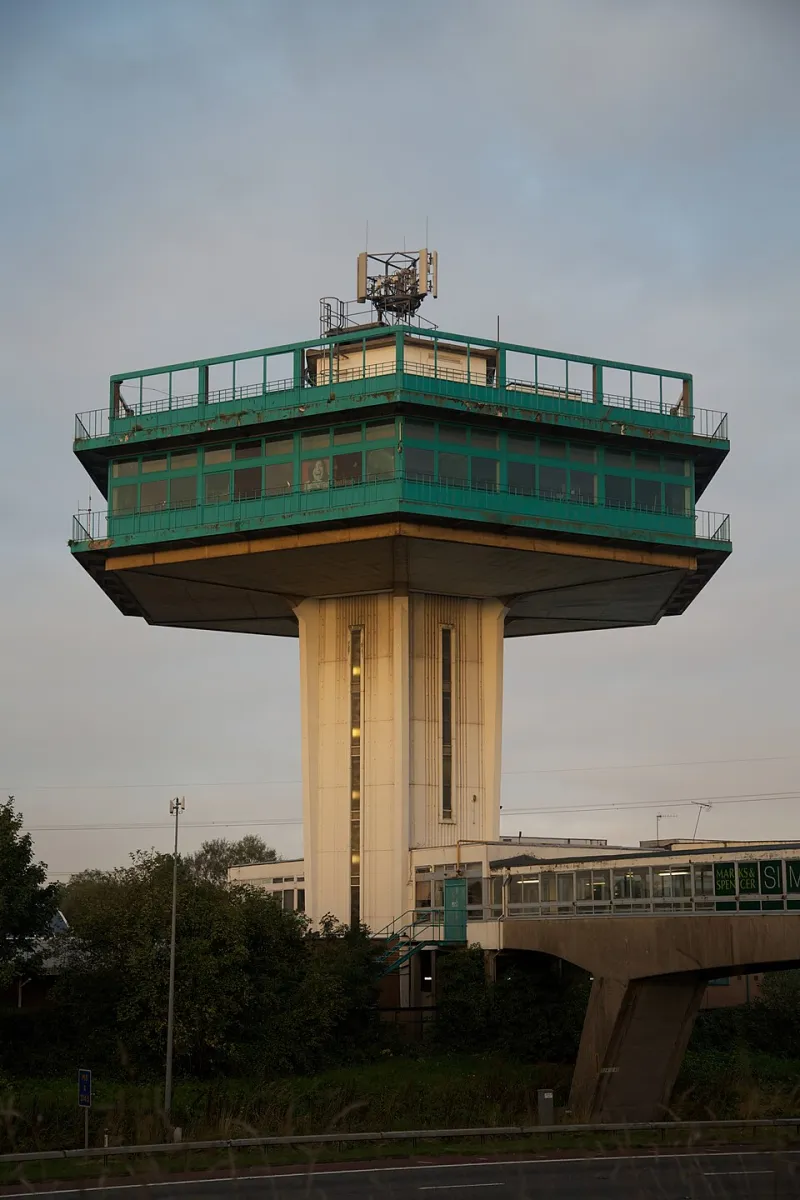
Photo: Tom Parnell, CC BY-SA 4.0, via Wikimedia Commons
Last Tuesday I stopped at a motorway services on the M6. The rain was coming sideways, the car park smelled of diesel and wet leaves, and I paid £4.20 for a pasty that tasted like an apology. I ate it standing up, beside a bin, while a man in a high-vis jacket discussed the price of a sausage roll with the woman on the till. It was, in its own strange way, one of the most honest public spaces I had been in all year.
We do not usually talk about service stations as culture. We talk about them as toilets with a Greggs attached. But that is exactly why they matter. They are one of the last places in Britain where nobody is pretending to be anywhere else.
The last uncurated room in Britain
There is no dress code at a service station. No booking system. No expectation that you have read the right review or know how to pronounce the name of the chef. You walk in from the car park, and for twenty minutes you are just another person who needs the loo and a cup of tea. The lorry driver, the family in matching fleeces, the teenager charging a phone by the WHSmith, the couple having a mild argument by the Costa counter — everyone is briefly equal. Not equal in a grand political sense. Equal in the way that matters when you are tired and it is raining.
Most cultural institutions ask something of you. A gallery asks you to look properly. A theatre asks you to sit still. A restaurant asks you to behave. The services asks only that you buy something, use the facilities and move on. That is a low bar, but it is also a kind of freedom. Nobody is curating your experience. Nobody is trying to make you feel like you are part of a lifestyle. The fluorescent lighting shows everyone exactly as they are, and mostly everyone looks fine with that.
A pasty, a plastic chair and the truth of the nation
The overpriced food is part of the honesty. Yes, the markup is absurd. Yes, the coffee is often a disappointment. But that money goes towards the lights, the car park, the toilets being cleaned at three in the morning, the fact that the place is open when nothing else is. The service station is not trying to be a bargain. It is trying to be there. There is something quite decent about that.
I like the way service stations collect people. On a wet Tuesday you get the sales rep eating a meal deal with the focused dignity of a man who has another three meetings before Leeds. You get the family who have stopped for a break and are now having a full-blown crisis by the Krispy Kreme cabinet. You get the night-shift worker buying a Lucozade at 6am, and the student who has been on a coach for nine hours and is now staring at a fridge full of sandwiches as if it might explain the universe. These are not glamorous scenes. They are just true ones.
What gets lost when every stop is ‘improved’
The problem is that we keep improving them. A refurbishment arrives, and suddenly the slightly shabby seating area is a ‘food court’. The hand-written sign about the closing time is a digital screen. The local bakery that used to have a counter is replaced by the same five brands you find at every other stop on the motorway. There is a mural about local history, usually involving a canal and a market town, and a seating area with sockets and a plant you are not allowed to water. It is all perfectly fine. It is also increasingly the same.
When every service station becomes a polished chain, we lose the small differences that make a journey feel like it happened somewhere. The smell of a particular coffee. The weirdly specific sandwich. The member of staff who calls you ‘love’ and means it. These are not grand cultural treasures, but they are the texture of ordinary life. And ordinary life is what most of us are actually living.
The service station is not a destination. It is a pause. But pauses tell you a lot about a country. They show you who is moving, who is working, who is struggling, who is going home. In a Britain that is increasingly obsessed with curated experience, the services remains one of the few places that does not ask you to be anything other than passing through. That is worth defending. Even if the pasty is £4.20 and tastes like regret.
If you want to understand modern Britain, spend an hour in a service station on a wet Tuesday. Not because it is beautiful. Because it is ours.